

The Minnesota Wild just lost one of their most important defenders, and that could force the team to look at the trade market a little differently. Brock Faber is expected to miss time with a skull fracture, leaving Minnesota without one of its most relied-on players on the blue line.
Faber is a big part of the Wild's defense, and losing him creates a pretty obvious hole. Minnesota can try to fill it internally, but there is also a chance for the team to look outside the organization for help. This is where the Detroit Red Wings could become an interesting trade partner.
A trade for Dylan Larkin & Justin Faulk makes sense despite the cost
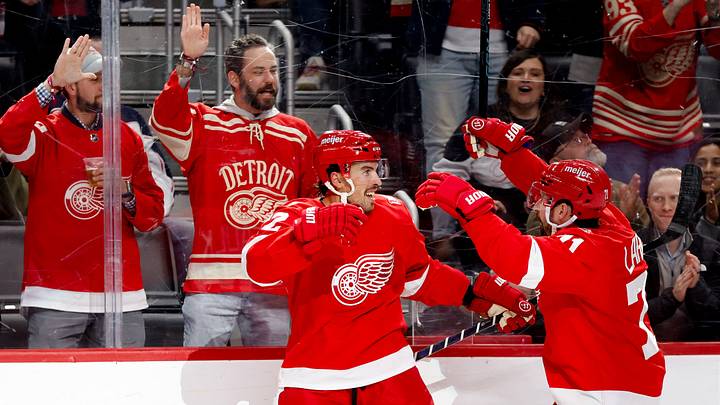
The Wild could look at a bigger deal that brings in Dylan Larkin to help their forward group while also adding a defenseman like Justin Faulk. Larkin would give Minnesota another experienced center, while Faulk could help fill some of the minutes that are going to be missing with Faber out. Obviously, a deal like that wouldn't come cheap. The Red Wings aren't going to move Larkin and Faulk for a couple of depth players, and Minnesota would likely have to give up some pretty significant packages, which would include roster players and future assets, to get a deal done.
That could mean prospects, draft picks, or young NHL players being part of the package, a similar offer to what they offered the Canucks for Quinn Hughes. Minnesota would have to decide how much of its future it is willing to give up to make a push right now. For the Wild, though, there is a reason to consider it. This is a team that wants to compete for a Stanley Cup, and losing Faber creates a pretty big problem on the blue line. Adding Faulk wouldn't replace Faber, but it would give Minnesota another experienced defenseman to help get through the season.
Larkin would finally give the Wild the top-line center that they have been lacking during the Kirill Kaprizov era. Adding him would make the forward group deeper and give Minnesota another center it can trust in serious situations.
The Wild needs to convince Hughes to stay
There is also the Hughes factor to consider. If Minnesota wants to convince Hughes to stay with the organization long-term, showing him that the team is willing to make big moves to compete could be important. That doesn't mean the Wild should simply give away every future asset they have. A trade involving Larkin and Faulk would be a massive price to pay, and Minnesota would have to be comfortable with what it is giving up.
At the same time, losing Faber could change the way the Wild approach the season. They already want to compete for a Stanley Cup, and now they have another reason to look for help. Although a deal with Detroit would be complicated, Larkin and Faulk would give Minnesota two players who could immediately help. If the Wild are serious about competing now and trying to keep Hughes around for the long term, this is the type of situation where they may have to spend some of their future to improve the roster today.
 Add us as a preferred source on Google